Did you know that we can easily check one of the most important indicators of female fertility—the proper function of the ovaries and the reserve of quality eggs—by using a reliable tool such as female fertility tests? They are affordable, fast, and most importantly, they can be used from the comfort of our own home.
We will try to address some related questions by answering the following:
– What are female fertility tests and how do they help me in my effort to conceive?
– Are they useful for me?
– What do the results of a female fertility test show?
– Which female fertility test is right for me?
Female fertility tests are diagnostic tests that detect, in urine, the concentration of a specific hormone called FSH (follicle-stimulating hormone). For ovulation to occur, the female body releases FSH in order for the egg that will ovulate that month to develop. If there is not an adequate reserve of quality eggs or if the ovaries are not functioning properly, the female body will try to compensate in order for ovulation to occur by releasing a large amount of FSH. This high concentration of FSH is detected by the test and shows us whether there is a dysfunction in one of the most critical and important indicators of female fertility, the ovarian–egg system.
Female fertility tests are a reliable tool, which can be used easily and quickly from the comfort of our home and provide valid results.

Checking the quality of the eggs and the function of the ovaries can be particularly useful if one or more of the following apply:
We are over 35 years old
We have an irregular cycle
We have been trying to conceive in a coordinated way (using a reliable method to identify fertile days) for more than 12 months
We want to check whether we are approaching menopause (especially important if there is a family history of early menopause)
If there is an adequate reserve of quality eggs and the ovaries function properly, the body does not need to produce a large amount of the hormone and FSH levels will be low (below 25 mIU/ml), so the test will show a negative result.
If the ovaries do not function properly and/or there is not an adequate egg reserve, the hormone will be detected at a high concentration (above 25 mIU/ml) in the body, as it will be produced in large amounts in an effort to achieve ovulation, and the test will show a positive result.
The ideal result we want from female fertility tests is a NEGATIVE one, as this indicates proper ovarian function.
At Mother2be you will find female fertility tests with result accuracy of over 99%.
Below we briefly list the available types and the main characteristics of each one, to help you choose the one that is right for you:
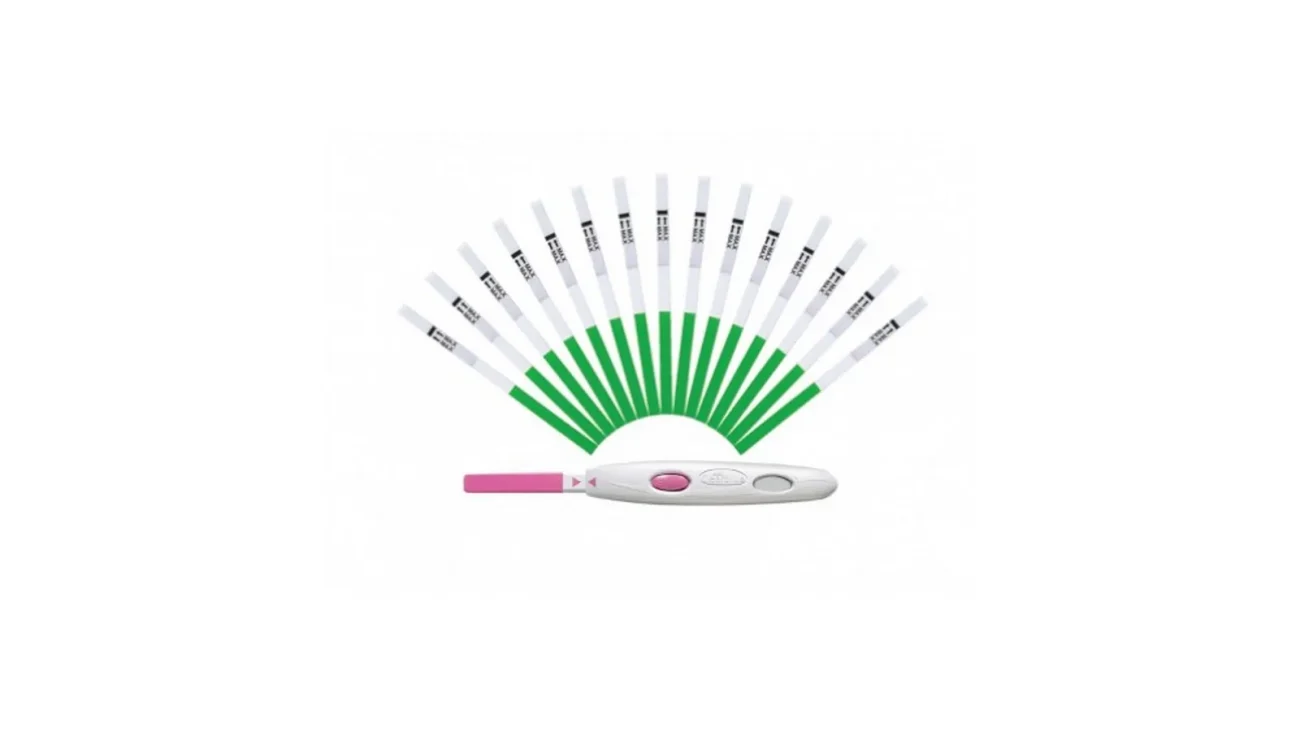
– One Step Female Fertility Test FSH Midstream (2 pcs)
Placed directly in the urine stream. It has a long handle for greater ease of use and a clear results window. It can be used on any day of the cycle. It is recommended to use it with first-morning urine, when FSH concentration is higher.
– One Step Female Fertility Test FSH Strips (3 pcs)
The most economical female fertility test, with equally high accuracy of results. It is used by dipping it into a urine sample collected in a clean container (not necessarily sterile). It is used on the third day of the cycle, meaning three days after the start of your period. It is normal for menstrual flow to still be present and this does not affect the test results. Use with first-morning urine is recommended, when FSH concentration is higher.
At Mother2be you will also find Male Fertility tests, here.
For more information, please contact us by phone at 2310 864440, Monday to Friday (09:00 a.m. – 17:00 p.m.), or send us an email at info@mother2be.gr


No account yet?
Create an Account