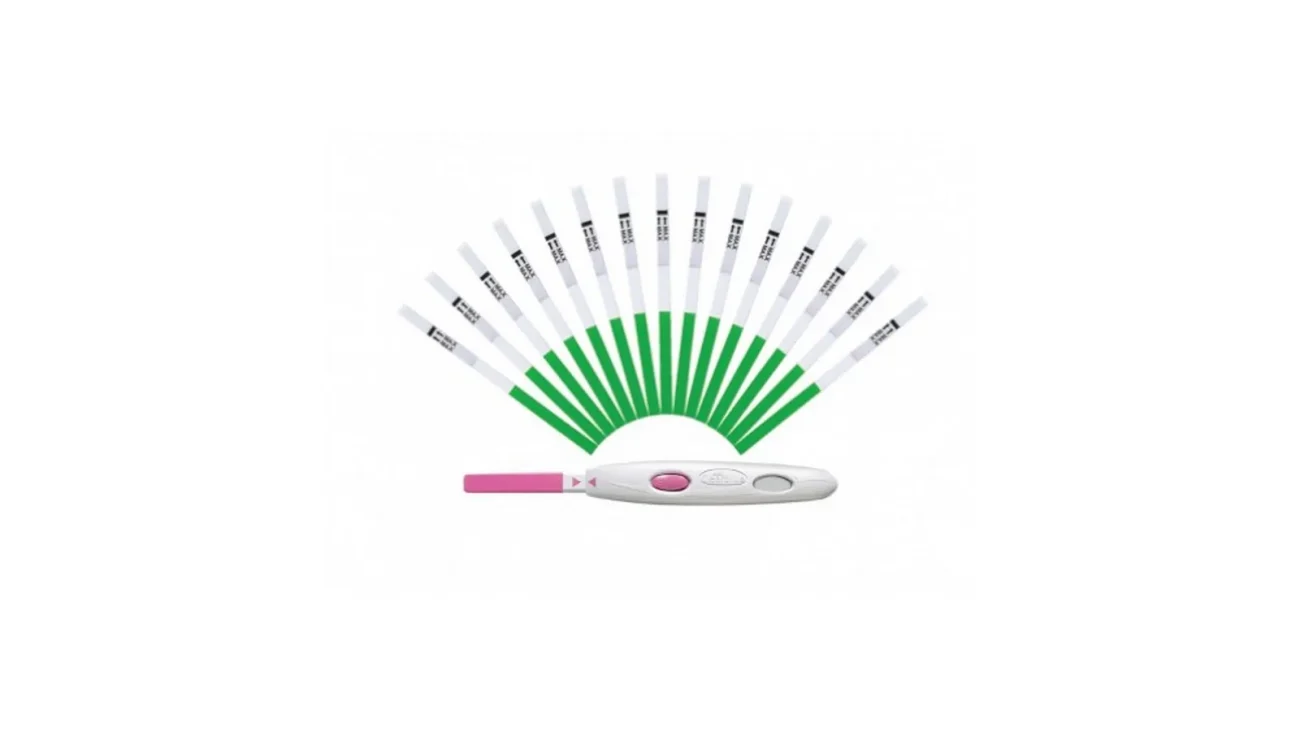
To achieve pregnancy, the couple needs to have intercourse on specific days of the month. When this does not happen, it is natural not to see results and to assume there is a problem or to experience additional stress, while usually it is simply a matter of correct timing!
The female body follows a reproductive process that repeats every month and, depending on the stage it is in, directly affects whether conception can occur.
More specifically, around the middle of the cycle, ovulation occurs, meaning an egg is released from the ovaries and waits in the fallopian tube for a period to be fertilized and form an embryo. If intercourse does not occur during this period, pregnancy cannot happen.*
There are specific days of the month—five in total—that are considered fertile and are the ones that can lead to pregnancy. During this time, monitoring our cycle and fertile days in a reliable way, whether through visits to the gynecologist or by conveniently using ovulation tests from the comfort of our home, is almost essential, because without intercourse during this period, a positive result cannot be achieved.
Knowledge of the cycle: the key to less stress and more confidence:
While it would be ideal to have all this knowledge early, since it directly concerns our own body, it is never too late to better understand its function. Understanding the menstrual cycle, fertile days, and ovulation can help us avoid the stress that often accompanies delays in conception or uncertainty.
*It is worth noting: exceptionally rare cases of conception have been reported either outside the fertile days or even during menstruation. These are exceptions, studied by the medical field, and do not reflect the norm.


No account yet?
Create an Account